Kapilarny plastometr serii LMI 5500
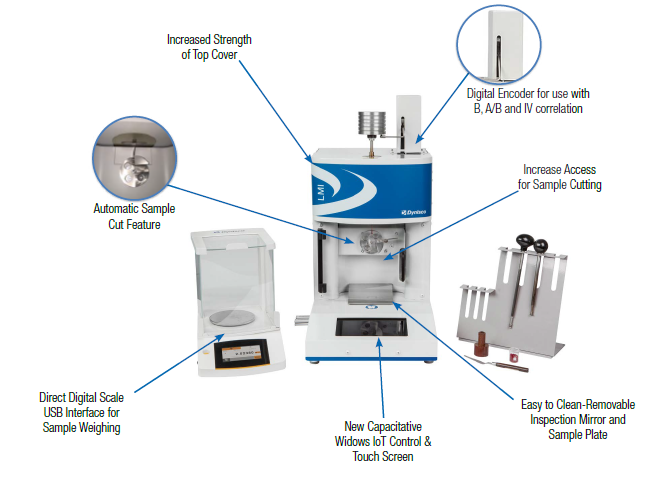
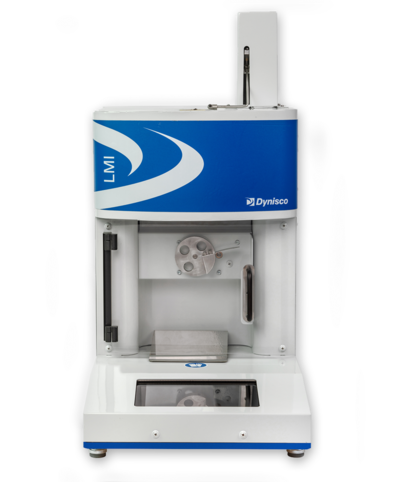
Ten kapilarny plastometr umożliwia pomiar większości parametrów reologicznych tworzyw termoplastycznych, w tym IV dla PET. Seria LMFI 5500 należy do najdokładniejszych urządzeń tego typu na świecie. Intuicyjne sterowanie zapewnia łatwą obsługę, a tryb dla doświadczonych operatorów znacząco skraca cały proces pomiarowy. Dzięki zaawansowanym funkcjom i technologiom urządzenie zapewnia najwyższą możliwą dokładność pomiaru. Korekcja wartości grawimetrycznej oraz dwustrefowe ogrzewanie nie tylko spełniają, ale również przewyższają wymagania najnowszej obowiązującej normy ISO 1133-2.
Ten kapilarny plastometr jest idealnym rozwiązaniem do kontroli jakości w laboratoriach, instytutach oraz na uczelniach, gdzie precyzja ma kluczowe znaczenie. Prosimy wypróbować LMI 5500 i zyskać niezawodne oraz precyzyjne urządzenie, które pozwoli Państwu poprawić jakość produktów.
Urządzenie zaskoczy Państwa łatwą obsługą, przyjaznym interfejsem i prostą konserwacją, przy zachowaniu maksymalnej dokładności. Ponadto, jeżeli w przyszłości zdecydują się Państwo na rozszerzenie wyposażenia, nasi technicy serwisowi w prosty sposób doinstalują wymagane moduły bezpośrednio na miejscu. Z LMFI 5500 mają Państwo pewność uzyskania dokładnych i niezawodnych wyników. W cenie uwzględnione są szkolenie i konsultacje. Gdyby jednak nadal pojawiły się jakiekolwiek pytania, do dyspozycji pozostaje techniczna pomoc online oraz możliwość wykonania akredytowanej kalibracji.
Dynisco Cloud
Capillary Melt Flow Indexer LMI 5500
Capillary Melt Flow Indexer LMI 5500
Capillary Melt Flow Indexer LMI 5500
Capillary Melt Flow Indexer LMI 5500
Jak zamówić
Skonfiguruj własny produkt, zgodnie ze swoimi wymaganiami i potrzebami. Jeśli nie jesteś pewien konfiguracji, podaj niezbędne informacje w notatkach o istniejącym produkcie, nawet konkurencji. Z przyjemnością pomożemy Ci znaleźć alternatywny produkt Dynisco. Jeśli Twoja prośba jest pilna, daj nam znać, a dołożymy wszelkich starań, aby jak najszybciej rozwiązać tę sytuację. Jeśli posiadamy te informacje, jesteśmy w stanie zaproponować model z niewielkimi różnicami, a następnego dnia możesz mieć towar u siebie.
Jeśli potrzebujesz więcej informacji, nie wahaj się z nami skontaktować.
Kod konfiguracji Dynisco:
Níže je celý vložený HTML/CSS blok přeložený do formální polštiny, se zachovanou strukturou kódu. Zdroj: ```html
Plastometr kapilarny
Dynisco LMI 5500
Dynisco LMI 5500 to modułowy plastometr kapilarny przeznaczony do precyzyjnego określania właściwości płynięcia stopionych tworzyw polimerowych. Umożliwia pomiar MFR, MVR oraz powiązanych parametrów reologicznych, z naciskiem na powtarzalność, stabilność pomiaru i przejrzystą dokumentację wyników.
MFR / MVR Maks. 400 °C ISO 1133 / ASTM D1238 Wi-Fi / Ethernet / USB
Temperatura robocza Maks. 400 °C
Wyniki MFR, MVR, MD, IV
Wyświetlacz 7" panel dotykowy
Łączność USB, Wi-Fi, Ethernet
Modułowa rozbudowa systemu
Konfigurację urządzenia można dostosować do laboratoryjnego workflow oraz wymagań kontroli jakości. Wybrane moduły pomagają zwiększyć dokładność pomiaru, zautomatyzować pracę z próbkami oraz usprawnić zarządzanie danymi.
Łączność
Dynisco IoT Cloud
Rozwiązanie chmurowe umożliwia monitorowanie laboratoryjnych i produkcyjnych urządzeń reologicznych w czasie rzeczywistym oraz centralizację danych z wielu zakładów w jednym przejrzystym panelu.
Dostęp online 24/7 Dane centralne Globalny przegląd
Dokładność
Enkoder cyfrowy
Enkoder cyfrowy zapewnia precyzyjny pomiar przesunięcia tłoka podczas testów metodą A/B i B. Przyczynia się do uzyskiwania stabilniejszych i lepiej odtwarzalnych wyników.
Precyzyjny przesuw tłoka Metody A/B i B Powtarzalność
Automatyzacja
Automatyczne odcinanie próbek
Automatyczny nóż wykonuje odcinanie próbek w zdefiniowanych czasach i pomaga uzyskiwać równomierne odcinki również w przypadku materiałów o wysokim wskaźniku szybkości płynięcia.
Stabilne odcinanie Mniejszy wpływ operatora Wyższa spójność
Kluczowe korzyści dla kontroli jakości
LMI 5500 wspiera stabilny laboratoryjny workflow, dokładniejsze pomiary oraz lepszą identyfikowalność wyników w ramach kontroli jakości materiałów polimerowych.
01
Konfiguracja modułowa
Możliwość rozbudowy o chmurę, enkoder cyfrowy lub automatyczne odcinanie próbek zgodnie z wymaganiami laboratorium.
02
Spójne wyniki
Precyzyjne sterowanie temperaturą i stabilny proces pomiarowy pomagają poprawić powtarzalność wyników.
03
Lepsza identyfikowalność
Bardziej przejrzyste zarządzanie wynikami, zapisami i danymi laboratoryjnymi na potrzeby kontroli jakości.
04
Nowoczesny workflow QC
Połączenie pomiarów laboratoryjnych z produkcyjną kontrolą jakości oraz możliwością zdalnego dostępu do danych.
i Zalecenie: Podczas testowania materiałów o wysokim wskaźniku szybkości płynięcia zaleca się zastosowanie automatycznego odcinania próbek. Pomaga to zmniejszyć wpływ operatora, ustabilizować wielkość odcinanych próbek oraz poprawić powtarzalność wyników.
Dostarczane wyniki
Urządzenie umożliwia ocenę podstawowych i rozszerzonych parametrów zachowania przepływowego stopionych tworzyw polimerowych.
| Wskaźnik szybkości płynięcia |
MFR – Melt Flow Rate [g/10 min] |
| Objętościowy wskaźnik szybkości płynięcia |
MVR – Melt Volume Rate [cm³/10 min] |
| Gęstość stopu |
MD – Melt Density [g/cm³] |
| Lepkość istotna PET |
IV – Intrinsic Viscosity [dl/g] |
| Lepkość ścinania |
Shear Viscosity [Pa·s] |
| Szybkość odkształcenia ścinającego |
Shear Rate [1/s] |
Parametry wydajnościowe
Główne parametry techniczne urządzenia Dynisco LMI 5500 do laboratoryjnej i produkcyjnej kontroli jakości.
| Spełniane normy |
ISO 1133-1, ISO 1133-2, ASTM D1238 & D3364, BS 2782, DIN 53735, JIS K7210 |
| Temperatura robocza |
Maks. 400 °C |
| Dokładność regulacji temperatury |
±0,10 °C |
| Dokładność timera |
0,001 s |
| Dokładność czujnika cyfrowego |
±0,025 mm |
| Wyświetlanie |
7" ekran dotykowy, kąt widzenia 130°, rozdzielczość 800 × 480 punktów |
| Obciążniki |
Aluminium, stal nierdzewna lub stal powlekana; zakres od 0,325 do 31,6 kg |
| Komunikacja |
4× port USB Podłączenie do komputera Podłączenie do druku Zapisywanie na dysku USB flash Wbudowane Wi-Fi i Ethernet
|
| Korekcja grawitacji |
TAK |
| Tryb ekspercki |
TAK |
| Opcjonalny schemat kolorów |
TAK |
| Dynisco Cloud |
TAK |
| Dynisco Service Care |
TAK |
| Regulowana kontrola PID |
TAK |
Pozostałe parametry
Dane wymiarowe, wagowe i zasilające modelu podstawowego.
| Wymiary całkowite modelu podstawowego |
13W × 21D × 20H in. / 33W × 53D × 51H cm |
| Masa modelu podstawowego |
47 lbs / 21,3 kg |
| Masa transportowa modelu podstawowego z obciążnikami |
180 lbs / 81,8 kg |
| Napięcie systemu |
100–120 Vac 50/60 Hz lub 220–240 Vac 50/60 Hz, 500 VA, +5 %, 1 faza |
| Moc |
Maks. 500 W, typowo 100 W w punkcie nastawy |
```
Akcesoria można zamawiać oddzielnie lub jako kompletny zestaw w postaci kompletnej obudowy "black-box".
This tool is used to remove the capillary from the melt flow indexer barrek before the cleaning process. The piston to remove the capillary has to be inserted from the bottom side of the barrel and then the capillary is pushed upwards out of the instrument. For instruments that have an automatic cut-off system, a tool code HEX-030 must be used.
HEX-030
This tool is used to remove the capillary from the barrel of the melt flow indexer with AutoCut before the cleaning process. The piston is inserted from the botttom of the barrel to remove the capillary, and then the capillary is pushed upwards out of the instrument.
0051-36
This tool is used to fill and pack polymer samples into the barrel of the melt flow indexer and can be used with both types of powder or pellets or other types of polymers.
0051-40
This tool is used to clean the chamber of melt flow indexer films and residue. One or two cotton patches are placed on the tool and the walls of the melt flow indexer barrel are cleaned by moving up and down. The capillary must be removed during this cleaning process, otherwise there is a risk of damage to the capillary.
GP0300
Glass beaker for measuring the sample. Can be used for powder mixtures and granulates.
0051-38
The swivel head of the pin vise (drill body) offers comfortable operation. Thanks to the double-ended pliers, different drill bit sizes can be stored. For better control, the pin vise body is made of grooved aluminium. Under the swivel part of the handle, there is an additional pincer, which is suitable for larger drill bits. The flared end of the pin vise body is used for hanging in the accessory rack
B0555
Copper brush for cleaning residue in the melt flow indexers barrel. Its thread is in inches and is compatible only with the original handle supplied with the instrument or can be reordered according to part number:0051-47. Or use the replacement:B0555CZ
B0555
The copper brush with extended adapter is used for manual cleaning of thick residues and burns in the barrel of a melt flow indexer or rheometer. Due to the softness of the material, you do not have to worry about damaging the instrument barrel. Thanks to the extended length, it lasts longer and removes more dirt per cleaning than standard brushes. It is mainly ideal for materials such as PET/PET/PC and additives that cause burns due to residual moisture, for example, and is very difficult to clean with cotton patches .
0051-46
Standard capillary for Dynisco plastometer with an inner diameter of 0.95 mm and a length of 8 mm. The capillary is identical on both sides and is coated with a layer of Wolram Carbide, which gives the capillaries greater hardness and longer life. The capillary is used for all standard polymeric materials up to a flow index range of 0.1 [g / 10min] to 80 [g / 10min]. For higher indices, we recommend using a so-called half-capillary with half dimensions.
0051-46S
The half capillary is used for polymeric materials with very low viscosity. These materials, which achieve flow indices higher than 80 [g / 10min], will slow down and their testing will be no problem. If you are going to use a half capillary, you need to adjust the capillary plastometer settings and record this change in settings.
0051-55
Cylindrical certified calibre for checking the capillary to the Dynisco melt flow indexer. The green end of the caliper must pass through the inner diameter of the capillary but the red end of the caliber must not pass through the diameter of the capillary. If the red end of the roller gauge passes through the capillary, it means that the capillary's inner diameter does not meet the required specifications and must be replaced.
0051-53
Knife for manual cutting of the sample from the capillary melt flow indexer and for subsequent cleaning of the capillary. It is made of high quality wooden handle and mild steel, which guarantees flexible blade bending and ensures comfortable cutting of the sample.
6052-16
The LMI accessory rack is used to store hot or used tools that are hung in the rack. After cooling, the individual elements can be cleaned. The rack helps to keep the workbench tidy and minimise the risk of injury.
7051-72
Certified measuring piston for Dynisco capillary plastometer with a declared weight of 100g. The piston contains 3 marked positions (lines) that show the position of the start of sampling and the end of sampling in the range of 30 mm according to ISO 1133 and a distance of 1 inch for ASTM D1238.
GP0310
The stainless steel capillary brush with a diameter of 2.2 mm is the ideal tool for materials that are difficult to clean with heat. Thanks to its solid construction, it is very easy and comfortable to use despite its miniature size. The brush confidently cleans all residual polymer deposits inside the capillary and thus ensures perfect measurement results.
0051-80
The composite funnel is used for convenient filling of powders into the barrel. Its inner diameter is identical to the diameter of the filling piston, so it is possible to push the piston through it and thus ensure a comfortable passage of polymer materials without spillage.
GP0103
Cleaning wheels for laboratory instruments have high cotton quality and low dust resistance. As a result, you will always have the instrument quickly and conveniently cleaned of all polymer deposits inside the barrel. Thanks to the 100% cotton, the polymer does not smear on the barrel wall, but stays on the cotton roller, which does not tear and leaves no lint.
1192001
It belongs to the group of scales with touch control. The biggest advantage of the Quintix series is easy operation via a color touch screen. Serious applications are clearly displayed with icons, as is usual today for "smart devices". Another plus of this series is excellent data communication. Each Quintix scale is equipped with a mini USB data output with Plug & Play technology.
Standard laboratory scales with clear display, simple operation and five operating modes. The advantage of this series is the PRE-TARE function (when activated, the stored weight is automatically deducted from the current measured weight).
B0555
The High Flow Plug is used as a seal against leakage of a filled barrel of a polymer that has a very low viscosity.
B8052-97K
Cordless angle drill for easy and quick cleaning of the melt flow indexer barrel. In combination with the cleaning mandrel with replaceable tip, this set is the best helper, which also has a positive effect on the accuracy and the results provided. It also includes an extension mandrel for attaching the brush.
B8052-97
Cordless angle drill for easy and quick cleaning of the melt flow indexer barrel. In combination with the cleaning mandrel with replaceable tip, this set is the best helper, which also has a positive effect on the accuracy and the results provided.
B8052-99A
The 8.5in (22cm) cleaning rod is used in combination with the cleaning tip and the cotton cleaning wheels. With this combination, you can clean the chamber quickly and easily using the cordless drill, with a positive effect on the accuracy of the instrument.
B8052-98
The barrel cleaning tip is used in combination with cotton cleaning patches and an extension cleaning rod. The tips are replaceable and made of aluminium to prevent damage to the melt flow indexer barrel. Nevertheless, this cleaning tip is only used with cotton patches.
The inspection mirror is used for inspection when cleaning the device, thanks to the telescopic handle you can easily and without risk get everywhere where you would otherwise have to lean or lean towards places with high temperature and thus avoid the risk of burns.
The new LaVa Suite software is now available for the LMI 5000 Series capillary plastometers. It offers complete and easy management when collecting, storing and working with digital data provided by the capillary plastometer. Lava Suite ™ software enables additional generated measurement results, filtering using identifiers and comparison of individual measurements on a larger scale, including time horizons.
Integrate and aggregate data from existing Dynisco products such as our LMI5000 & LMI4004 melt flow indexers, our LCR7000 capillary rheometer, and instrumentation like our UPR900 process indicator via the Dynisco Edge Device. With the Edge Device you have a single board computer that helps you better understand and manage:
The universally applicable Memmert laboratory dryer is a classic temperature control device in the field of research, science and materials testing. Technologically improved construction made of high quality and easy to clean stainless steel. It has ventilation and control technology (optional), protection against overheating and precisely tuned heating technology.
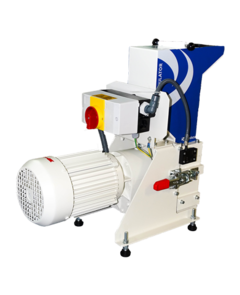
MiniGran to granulator laboratoryjny przeznaczony do granulacji mniejszych elementów z tworzyw sztucznych. Dzięki swoim kompaktowym rozmiarom, granulator ten można umieścić niemal wszędzie i dlatego jest bardzo odpowiedni do zastosowań laboratoryjnych. Granulator nadaje się do wszystkich rodzajów tworzyw sztucznych, dzięki niskiej prędkości obrotowej wirnika przetwarza tworzywa sztuczne na wysokiej jakości recyklaty o niskiej zawartości pyłu.
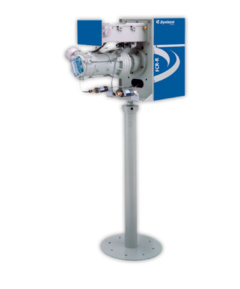
Zaprojektowany specjalnie dla przemysłu polimerów termoplastycznych, ViscoIndicator zapewnia ciągły pomiar wskaźnika przepływu stopu, lepkości pozornej lub lepkości wewnętrznej bezpośrednio na wytłaczarce.
ViscoIndicator powiela warunki testowe laboratoryjnego przyrządu do wskaźnika przepływu stopu (MFR) lub reometru kapilarnego.
Specjalnie zaprojektowany dla przemysłu polimerów termoplastycznych. ViscoSensor zapewnia ciągły pomiar wskaźnika płynięcia lub lepkości pozornej lub lepkości wewnętrznej (IV) bezpośrednio na linii produkcyjnej.
Spełnia normy: Wskaźnik szybkości płynięcia online ASTM D1238, ISO 1133 lub JIS K 7210
Specjalnie zaprojektowany dla przemysłu żywic termoplastycznych, Seria Dynisco CMR może być skonfigurowana do pomiaru natężenia przepływu stopu, natężenia przepływu stopu przy wysokim/niskim obciążeniu, pozornego natężenia przepływu stopu. szybkości płynięcia, szybkości płynięcia przy wysokim/niskim obciążeniu, lepkości pozornej lub innych testów zdefiniowanych przez klienta. lepkości lub do wykonywania innych testów zdefiniowanych przez klienta.
Seria reometrów Dynisco FCR-R, zaprojektowana specjalnie dla przemysłu produkcji włókien syntetycznych, może być skonfigurowana do pomiaru zakresu pozornej lepkości ścinania, podwójnego natężenia przepływu stopu, jednoczesnego natężenia przepływu stopu i lepkości rozszerzonej przy użyciu równań Cogswella.
Wsparcie techniczne
Wsparcie, certyfikaty i zasoby techniczne
Przegląd istotnych zasobów do pracy z produktami, weryfikacji certyfikatów, szkoleń technicznych oraz szybszego rozwiązywania typowych pytań eksploatacyjnych lub aplikacyjnych.
Dokumentacja
Certyfikaty i dopuszczenia
Przegląd dostępnych certyfikatów i dopuszczeń dla poszczególnych produktów. Sekcja służy do weryfikacji zgodności, jakości oraz wymagań bezpieczeństwa zgodnie z aktualnie dostępną dokumentacją.
Wyświetl certyfikaty
Szkolenia
E-Learning
Kursy online i materiały informacyjne ukierunkowane na efektywne użytkowanie produktów, prawidłowe procedury pracy oraz lepszą orientację w technologiach i możliwościach aplikacyjnych.
Przejdź do E-Learningu
Poradniki wideo
Filmy instruktażowe
Praktyczne filmy umożliwiające szybkie zapoznanie się z produktami, prezentujące sposób użytkowania oraz rozwiązania typowych sytuacji. Odpowiednie jako uzupełnienie wsparcia technicznego oraz do szkolenia operatorów.
Wyświetl filmy
Informacje techniczne
Ważne artykuły
Artykuły techniczne, zalecenia i praktyczne informacje dotyczące produktów, ich zastosowania oraz rozwiązywania wybranych kwestii eksploatacyjnych lub aplikacyjnych.
Przejdź do artykułów
i Zalecenie: W celu technicznej weryfikacji konkretnego produktu należy rozpocząć od sekcji certyfikatów i dopuszczeń. Dla pracy operatorów szczególnie odpowiednie są E-Learning oraz filmy instruktażowe.