
Melt Flow Indexer Accessories - Black Box
Accessories can be ordered separately or as a complete set in the form of a complete "black-box" case.


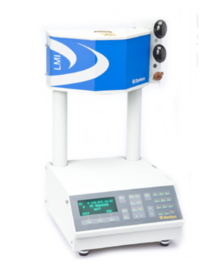
For over 25 years the Dynisco Polymer Test has taken
a leading role in working with the polymer process-ing industry to develop advanced polymer melt testing instrumentation for quality control and research applications. This extensive experience, combined with advances in electronics technology, has resulted in the new LMI 4000 melt flow indexers.
Four melt flow indexer models are offered in the advanced Dynisco Polymer Test LMI 4000 series, each with features designed to meet specific application requirements:
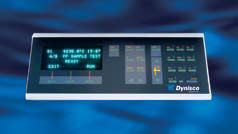 • A 4-line by 20-character vacuum fluorescent display allows users to read detailed information about test conditions.
• For international use, the display operates in English, German, French, Spanish and Czech.
• Smart keys located directly under the display allow operators to quickly program the LMI 4000 by accessing menus of the most common test conditions.
• For special tests, custom programs can be entered using the membrane keypad, with models D4003 and D4004 able to recall up to 60 sets of test conditions from memory.
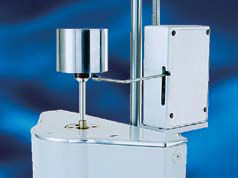 • The digital encoder option, D4059, is the most accurate method available to measure piston displacement and rate of descent during test method “B.”
• Accurate to within 0.025mm over the full 25.4mm test travel length.
• Allows up to fifteen discrete melt index values to be collected per test, with each discrete melt index value reported or the average melt index.
• Available on D4002, D4003 and D4004 models.
• In addition, the LMI 4000 with D4059 can monitor the piston’s rate of descent and automatically select the correct flag length for that test.
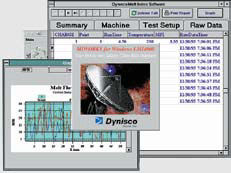
• Operating in the popular Windows™ environment on standard personal computers, Dynisco Polymer Test’s MIWORKS for Windows™ acts as a melt index test database.
• The software downloads test parameters directly to the melt indexer and enables control charts to be created and data exported to spreadsheets.
• Up to eight model D4004 units can be connected to a single personal computer when using the optional multiplexing system.
• MIWORKS for Windows™ software is provided with each model D4004 melt indexer.
• By simply connecting model D4003 or D4004 to a standard printer, comprehensive reports about the melt index test are quickly generated by the instrument’s internal computer.
• Intrinsic Viscosity of PET correlation values are reported with Models D4003 and D4004. In addi-tion to information about test conditions, values for melt index, shear stress, viscosity and appar-ent melt density are reported.
• The LMI 4000 calculates the average, standard deviation and coefficient of variance for both the melt index and viscosity values when performing multiple tests of the same material.
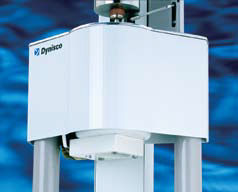 • Pneumatic or electric weight lowering and raising systems are offered for use with heavy loads or for more automatic operation of the melt index test.
• The lifts allow flow rate ratio and other multiple load tests to be conducted safely, and is avail-able on all models except the basic D4001.
• Lift weights are an innovative design that “stack” for improved ergonomics, to meet all ASTM D1238 melt conditions, and to allow for weight interchangeability.
• An alloy barrel is available for testing PVC and other corrosive materials.
• For installations performing frequent melt index tests or where hard-to-clean engineering poly-mers are being tested, the optional high-speed barrel bore power cleaning kit is a must.
• An automatic cut-off device can improve precision of method “A” tests.
• Available on all models, the auto cutoff device can be programmed to make cuts at fixed intervals after “melt time” is completed.
• Performance that meets international standards
• Stackable weight options that are both user and ASTM D1238 standards friendly
• Self-diagnostics capability
• Comprehensive statistical capability
• Simple push-button RTD calibration
• Smart keys for easy programming
• Bright, 4-line by 20-character vacuum fluorescent display
• Windows™ software for test database and analysis
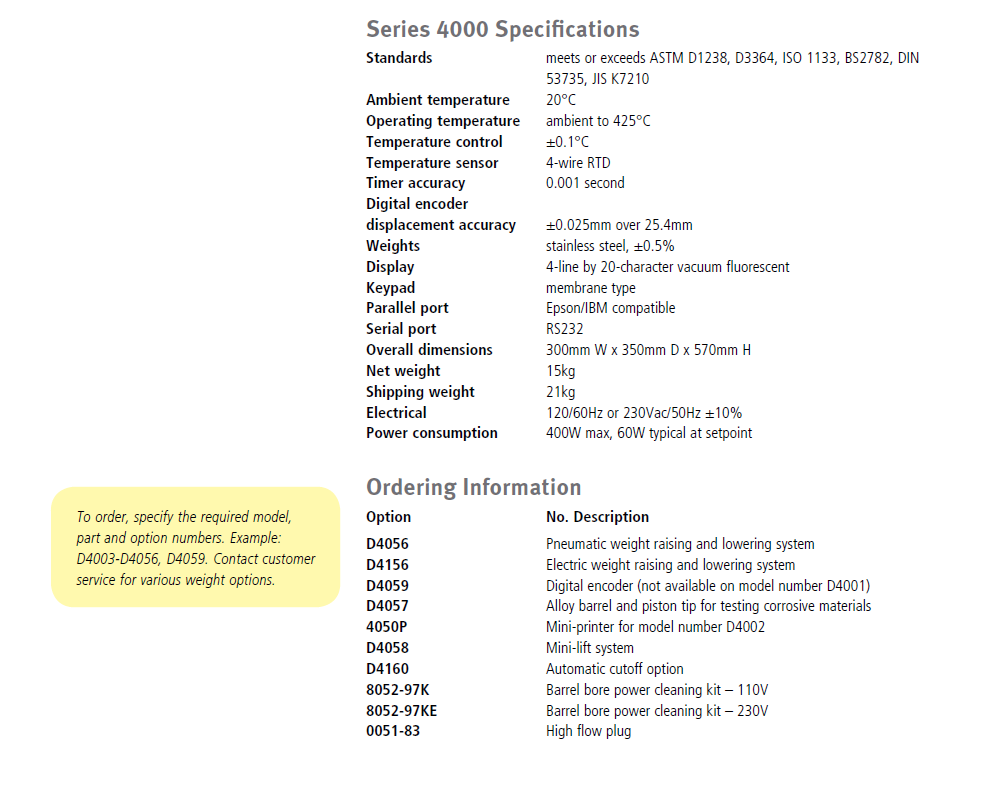
| Melt flow index: | MFR - Melt Flow Rate [g/10min] |
|---|---|
| Melt flow index: | MVR - Melt Volume Rate [ccm/10min] |
| Melt density: | MD - Melt Density [g/ccm] |
| Intrinsic viscosity (PET): | IV - Instristic viscosity [dl/g] |
| Shear Viscosity: | Shear Viscosity [Pa.s] |
| Shear rate: | Shear Rate [1/s] |
| Meets standards: | ISO1133-1, ASTM D1238 & D3364, BS2782, DIN 53735, JIS K7210 |
|---|---|
| Operating temperature: | Max. 425°C |
| Temperature control accuracy: | ±0.10°C |
| Timer accuracy: | 0.001 s |
| Accuracy of digital encoder: | ±0.025mm over 25.4mm |
| Display: | 4-line by 20-character vacuum fluorescent |
| Keypad: | Membrane type |
| Weights: | Weights stainless steel, ±0.5% |
| Communication: |
RS232 - Parallel port Epson/IBM compatible
|
| Dynisco Cloud: | YES |
| Dynisco Service Care: | YES |
| Overall Dimensions, Base Model: | 300mm W x 350mm D x 570mm H |
|---|---|
| Weight, Base Model: | 15kg |
| Shipping Weight, Base Model with Weights: | 21kg |
| System Voltage: | 120/60Hz or 230Vac/50Hz ±10% |
| Power: | 400W max, 60W typical at setpoint |
Accessories can be ordered separately or as a complete set in the form of a complete "black-box" case.

Certified measuring piston for Dynisco capillary plastometer with a declared weight of 100g. The piston contains 3 marked positions (lines) that show the position of the start of sampling and the end of sampling in the range of 30 mm according to ISO 1133 and a distance of 1 inch for ASTM D1238.

Cleaning wheels for laboratory instruments have high cotton quality and low dust resistance. As a result, you will always have the instrument quickly and conveniently cleaned of all polymer deposits inside the barrel. Thanks to the 100% cotton, the polymer does not smear on the barrel wall, but stays on the cotton roller, which does not tear and leaves no lint.

Knife for manual cutting of the sample from the capillary melt flow indexer and for subsequent cleaning of the capillary. It is made of high quality wooden handle and mild steel, which guarantees flexible blade bending and ensures comfortable cutting of the sample.

Standard capillary for Dynisco plastometer with an inner diameter of 0.95 mm and a length of 8 mm. The capillary is identical on both sides and is coated with a layer of Wolram Carbide, which gives the capillaries greater hardness and longer life. The capillary is used for all standard polymeric materials up to a flow index range of 0.1 [g / 10min] to 80 [g / 10min]. For higher indices, we recommend using a so-called half-capillary with half dimensions.

The half capillary is used for polymeric materials with very low viscosity. These materials, which achieve flow indices higher than 80 [g / 10min], will slow down and their testing will be no problem. If you are going to use a half capillary, you need to adjust the capillary plastometer settings and record this change in settings.

The stainless steel capillary brush with a diameter of 2.2 mm is the ideal tool for materials that are difficult to clean with heat. Thanks to its solid construction, it is very easy and comfortable to use despite its miniature size. The brush confidently cleans all residual polymer deposits inside the capillary and thus ensures perfect measurement results.

The universally applicable Memmert laboratory dryer is a classic temperature control device in the field of research, science and materials testing. Technologically improved construction made of high quality and easy to clean stainless steel. It has ventilation and control technology (optional), protection against overheating and precisely tuned heating technology.
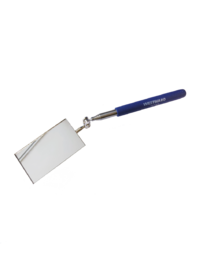
The inspection mirror is used for inspection when cleaning the device, thanks to the telescopic handle you can easily and without risk get everywhere where you would otherwise have to lean or lean towards places with high temperature and thus avoid the risk of burns.

Cylindrical certified calibre for checking the capillary to the Dynisco melt flow indexer. The green end of the caliper must pass through the inner diameter of the capillary but the red end of the caliber must not pass through the diameter of the capillary. If the red end of the roller gauge passes through the capillary, it means that the capillary's inner diameter does not meet the required specifications and must be replaced.

The LMI accessory rack is used to store hot or used tools that are hung in the rack. After cooling, the individual elements can be cleaned. The rack helps to keep the workbench tidy and minimise the risk of injury.
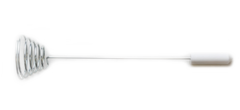
The High Flow Plug is used as a seal against leakage of a filled barrel of a polymer that has a very low viscosity.

Cordless angle drill for easy and quick cleaning of the melt flow indexer barrel. In combination with the cleaning mandrel with replaceable tip, this set is the best helper, which also has a positive effect on the accuracy and the results provided. It also includes an extension mandrel for attaching the brush.

Cordless angle drill for easy and quick cleaning of the melt flow indexer barrel. In combination with the cleaning mandrel with replaceable tip, this set is the best helper, which also has a positive effect on the accuracy and the results provided.

The 8.5in (22cm) cleaning rod is used in combination with the cleaning tip and the cotton cleaning wheels. With this combination, you can clean the chamber quickly and easily using the cordless drill, with a positive effect on the accuracy of the instrument.

The barrel cleaning tip is used in combination with cotton cleaning patches and an extension cleaning rod. The tips are replaceable and made of aluminium to prevent damage to the melt flow indexer barrel. Nevertheless, this cleaning tip is only used with cotton patches.
 Overview of Available Certificates and Approvals: Visit this link, which will take you to a page with a comprehensive list of current certificates and approvals for our products. Here, you can verify that our offerings meet the highest standards of quality and safety.
 Discover the world of our online E-Learning page and find out how to streamline your daily use of our products. Our practical and comprehensive courses and informational materials will show you how to simplify and enhance the use of our technologies, uncover new information and techniques, and optimize work processes. With these resources, you'll achieve higher efficiency, save time, and improve your work results.
 Our instructional videos offer an interactive way to learn about our products. Combining visual and auditory content, they provide practical solutions to common issues, saving you time and avoiding potential problems. If you encounter an issue, our video manuals offer detailed instructions and practical tips to help you resolve it. Available at any time, they provide a convenient resource that complements our technical support.
 Our technical articles offer a practical way to learn more about our products and their use. They provide detailed information and practical tips on how to solve common problems, saving you time and helping you avoid potential issues. If you still encounter a problem, our technical articles offer specific instructions for solving it. They are available at any time and are a convenient source of information that complements our technical support.
